Choosing a construction system is one of the most important decisions when starting a building project. Two of the most popular options today are the Steel Frame system and concrete structures. Traditionally in Spain, reinforced concrete has been the most widely used method, but in recent years Steel Frame construction has gained prominence as an innovative and highly efficient alternative.
What is the Steel Frame system?
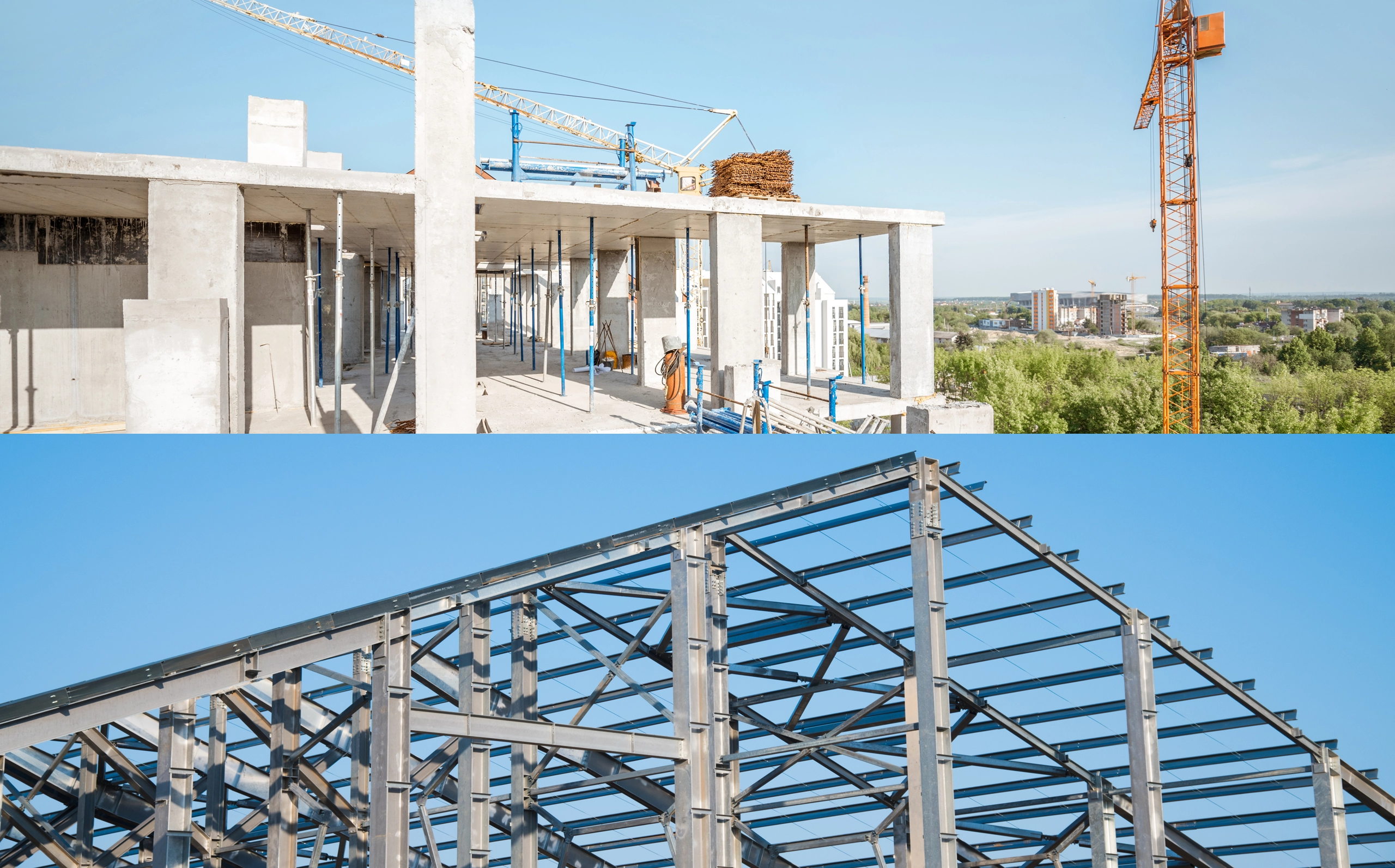
Steel Frame is an industrialized construction system that uses thin galvanized steel profiles as the main structure, forming a framework of vertical studs and horizontal tracks connected with screws. Panels (gypsum board, OSB, etc.) are fixed to both sides of this metal structure, leaving an internal cavity for thermal and acoustic insulation.
At personalHOME, we compare both systems and explain the 7 advantages that the Steel Frame system has over the traditional concrete system.
Construction speed
One of the most significant advantages of Steel Frame is execution time. While a concrete structure requires curing periods (generally 28 days to reach optimal strength) and is highly dependent on weather conditions, Steel Frame allows for much faster construction. Steel elements are precisely manufactured in a workshop and quickly assembled on site, which can reduce construction timelines by up to 50% compared to traditional methods.
Weight and foundations
Steel Frame offers significantly lighter structures, weighing approximately 80% less than an equivalent concrete construction. This feature has important implications: it requires less deep and less expensive foundations, is ideal for soils with lower load-bearing capacity, and makes vertical extensions on existing buildings easier. In contrast, concrete structures require more robust and costly foundations due to their considerable weight.
Flexibility and design
The architectural versatility of Steel Frame allows for the creation of open-plan spaces with larger spans without the need for intermediate columns, making future changes to the interior layout easier. Steel profiles offer great design freedom and can easily adapt to changes during construction. Concrete, on the other hand, while allowing various shapes through formwork, becomes much more rigid once built, making later modifications to structural walls more difficult.
Environmental sustainability
In terms of ecological impact, steel is 100% recyclable and can be reused infinitely without losing its properties. Dry construction generates less waste and consumes less water during the building process. Although concrete can incorporate recycled materials, its production (especially cement) generates high CO₂ emissions and requires large amounts of water, resulting in a greater environmental footprint.
Precision and quality
The industrial manufacturing of Steel Frame components ensures millimetric tolerances and thorough quality control in the workshop. This significantly reduces on-site errors and ensures a more precise finish. Concrete, being mostly executed on site, is more exposed to variations caused by human and environmental factors, requiring greater supervision to maintain consistent quality standards.
Insulation and energy efficiency
Steel Frame design facilitates the integration of continuous thermal insulation throughout the entire building envelope, eliminating thermal bridges and significantly improving energy efficiency. The cavities within the structure can be filled with various insulating materials. Concrete has good thermal mass, but requires additional insulation to meet current energy efficiency regulations and makes it more difficult to avoid thermal bridges at structural junctions.
Costs
Although the cost per square meter may vary depending on the region and the specific project, Steel Frame generally offers more competitive prices when the project is considered as a whole. Reduced construction time, lower foundation costs, and more efficient labor offset the material price. Concrete costs can vary depending on project complexity, availability of local materials, and the need for specialized equipment such as cranes and concrete pumps.
Each system has its place in modern construction. Concrete remains excellent for large infrastructures, basements, and structures that require high thermal mass. However, for single-family homes, low- and mid-rise buildings, extensions, and projects where time and sustainability are priorities, Steel Frame emerges as a better option that combines efficiency, quality, and environmental responsibility. The final decision will depend on the specific needs of each project, ground conditions, the available budget, and execution timelines. What matters most is having professionals like personalHOME, specialized in adapting the construction system of each project to the client’s needs.