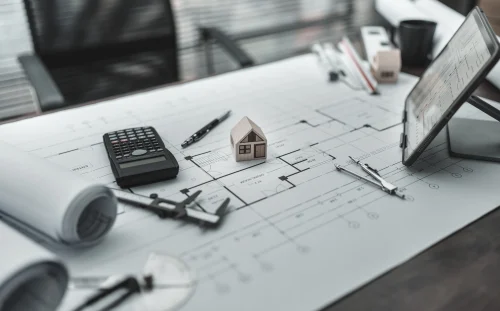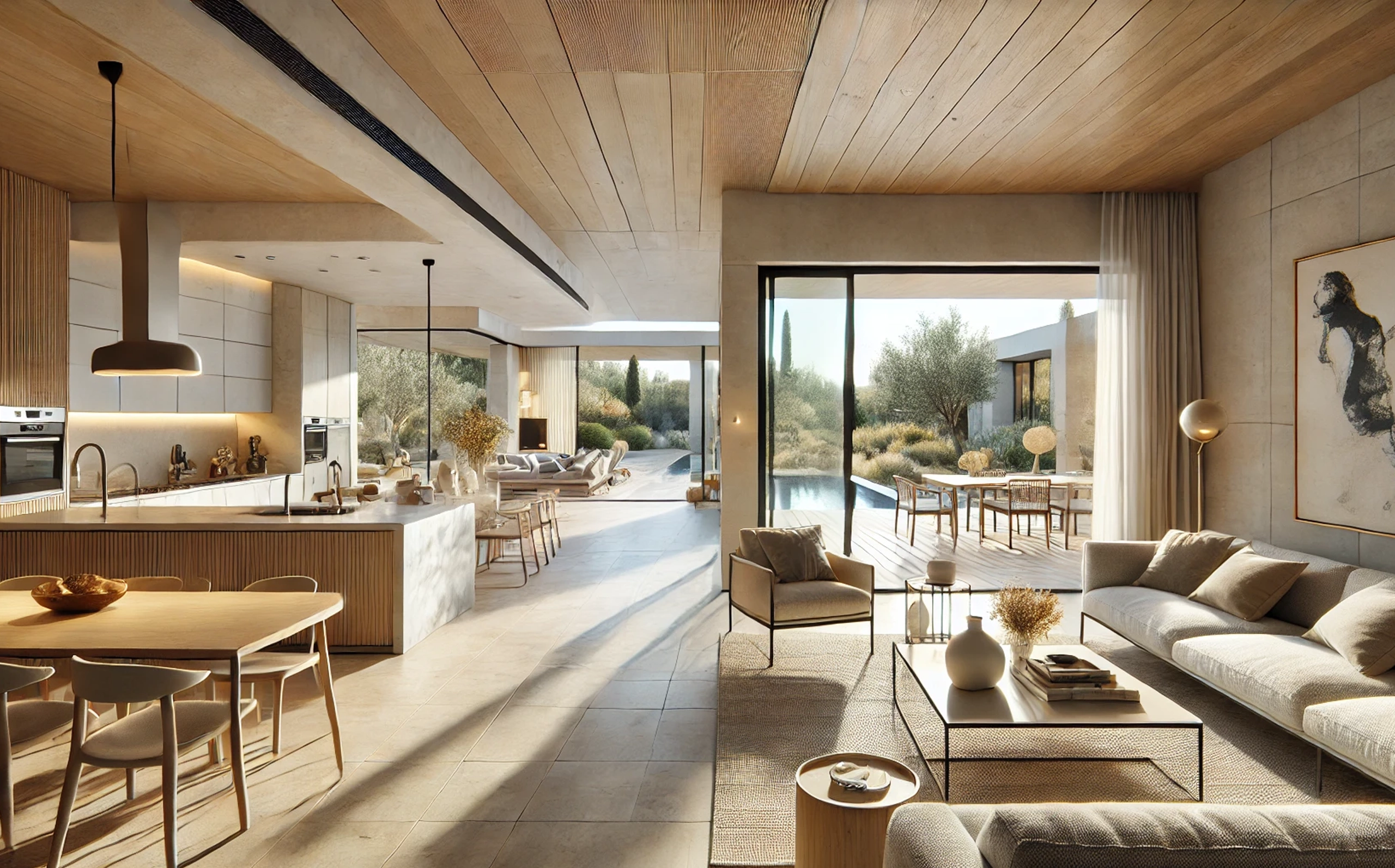
Residential architecture is undergoing a profound transformation, driven by new social priorities, technological advances, and growing environmental awareness. Today’s single-family homes reflect a paradigm shift: they are no longer designed solely as aesthetic refuges, but as multifunctional spaces that respond to our changing needs and to the planetary context we inhabit. At personalHOME, we give you a preview of the architectural trends for 2026 in single-family homes.
Sustainability as a Central Axis
It is no longer a “plus,” it is a requirement: sustainability permeates every design decision, from the use of recycled and low-impact materials (such as certified wood, eco-friendly concrete, and reclaimed bricks) to the integration of renewable energies like solar panels, geothermal systems, and passive climate control strategies.
Added to this is bioclimatic design, which takes advantage of orientation to capture sunlight in winter, provide shade in summer, and optimize natural ventilation, resulting in homes that not only consume resources, but also generate and regulate their own environment.
The Dissolution of Interior–Exterior Boundaries
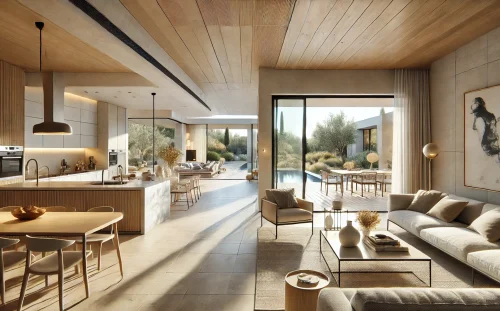
Contemporary architecture stands out for its seamless integration between interior and exterior spaces, eliminating barriers through large glazed surfaces, folding doors, and the continuity of materials toward terraces and gardens. This visually expands homes and strengthens the connection with nature and natural light.
In this context, interior courtyards are re-emerging as key elements, especially in dense urban areas, as they provide privacy, promote natural ventilation, and function as green lungs that create comfortable microclimates within the home.
Nuanced Minimalism and Honest Materiality
Minimalism remains, but it adopts a warmer, more sensory character, moving away from white, sterile interiors to give prominence to natural and honest materials such as untreated wood, exposed concrete, corten steel, and irregular stone, whose real textures and aging become part of the design.
This aesthetic values imperfection, the passage of time, and matte finishes, in harmony with philosophies such as wabi-sabi, allowing surfaces to retain their grain, knots, and natural chromatic variations.
Discreet Technological Integration
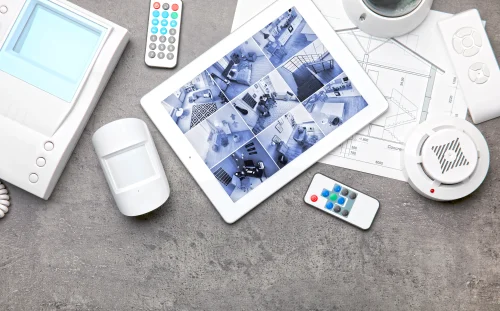
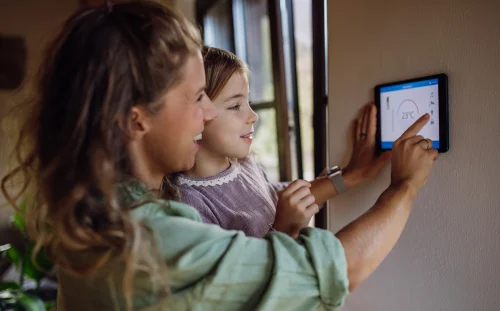
Home automation has reached a level of maturity that allows it to integrate almost invisibly into spaces, enabling control from mobile devices of adaptive lighting, zoned climate control, automated blinds, and energy management without visual impact.
At the same time, increasingly efficient photovoltaic installations are discreetly incorporated into roofs, even as solar tiles, while technologies such as aerothermal and geothermal systems drive sustainable climate control, and home batteries are beginning to consolidate energy self-sufficiency.
Contextual Architecture Sensitive to Place
In response to global homogenization, an architecture sensitive to context is emerging—one that dialogues with its specific surroundings by integrating topography, climate, views, vegetation, and local building traditions to generate unique, deeply rooted solutions.
This approach is reflected in projects that adapt to the land rather than imposing themselves upon it, preserve natural elements, and take advantage of environmental conditions—such as the thermal inertia of the ground or prevailing winds—to achieve more sustainable and place-coherent solutions.
The future of residential architecture seems to be moving toward a synthesis between technological innovation and ancestral wisdom, where the global and the local converge to create truly livable spaces in the deepest sense of the word. That is why at personalHOME we do not create construction projects, but rather life projects where our clients’ values can endure eternally.
If you feel that your way of living deserves a space worthy of it, tell us about your project and let’s start designing your future together.